Loading...
- Home
- About
- Exhibit & Sponsor
- Visit
- OSW Awards
- News
- Contact
- Show more
Oman’s integrated approach to green hydrogen development has received international recognition, with a new global study highlighting the Sultanate’s coordinated planning and shared infrastructure strategy as a model for emerging hydrogen economies.
The November 2026 report, Hydrogen's Trade Gateway: Catalysing Investment in Export Infrastructure, published by Germany-based H2Global Foundation, identifies Oman alongside Brazil, Namibia and South Africa as key examples of hydrogen export infrastructure development.
The study highlights the role of Hydrogen Oman (Hydrom) in overseeing land allocation, coordinating infrastructure investments and supporting the development of large-scale green hydrogen projects in Duqm and Salalah.
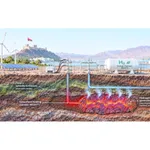
A central component of Oman’s strategy is its Common-User Infrastructure (CUI) framework, designed to allow multiple hydrogen producers to share essential facilities, including transmission pipelines, electricity networks, desalination plants and water transportation systems.
In Duqm, the proposed infrastructure includes approximately 200 kilometres of hydrogen pipelines, alongside supporting electricity and water networks. The shared infrastructure approach aims to reduce duplication, improve operational efficiency and strengthen the commercial viability of hydrogen projects.
The report also outlines the production potential of Oman’s two major hydrogen development hubs:
Duqm: Approximately 4 million tonnes of announced annual hydrogen-equivalent production capacity across remaining projects.
Salalah: Around 900,000 tonnes of planned annual capacity, with opportunities to utilise and expand existing industrial infrastructure.
Further supporting Oman’s hydrogen ambitions, two green hydrogen projects recently awarded in Duqm under Hydrom’s third bidding round are targeting a combined annual production of 121,000 tonnes of green hydrogen by 2032.
These projects are also expected to support downstream production of approximately 625,000 tonnes of green ammonium nitrate and 400,000 tonnes of green ammonia annually, strengthening the Sultanate’s ambitions to develop value-added green industries.
While the study acknowledges that commercial arrangements relating to infrastructure ownership, tariffs and investment risks are still being developed, it identifies Oman’s coordinated framework as a potentially valuable reference for other hydrogen-producing economies.
By combining national infrastructure planning with private-sector project development, Oman is working to establish a more integrated and competitive hydrogen ecosystem, supporting its long-term energy diversification and clean energy export ambitions.